

Key Takeaways
- Original Intelligence is the measurable human capacity to generate ideas that are genuinely novel, expanding beyond what AI or conventional thinking can produce, and it is becoming the defining metric for success in an AI-driven world.
- As AI tools become universally accessible, Original Intelligence is the primary driver of meaningful differentiation. Businesses that rely on AI outputs alone risk producing work that looks identical to their competitors.
- Original Intelligence can be identified, measured, and developed over time, which means organizations have a real and actionable path to building more prepared teams.
- Hupside currently has one of the only validated tools for measuring Original Intelligence, Hupchecker, which generates an OIQ Score and OIQ Type for every individual and team assessed.
A New Era Demands a New Metric
Every major technological shift in history has forced a reckoning with what human contribution actually means. Mechanization changed the value of manual labor, just as the computing revolution changed the value of knowledge work. Now, the arrival of AI is doing something more nuanced: it is changing the value of creativity itself.
AI can do almost anything these days, and can do many of these things faster and at greater scale than any individual human. In spite of AI’s ability to draft a strategy memo, generate marketing copy, summarize legal documents, and write code, to name some examples, it still is lacking in one major way. It cannot be original. At least, not in the truest sense of the word.
When millions of people prompt a large language model with the same question, they get answers that emerge from the same training data, shaped by the same patterns, drawing from the same idea space. The output may look creative and insightful. But it reflects what has already been said, synthesized and repackaged. This is the core tension at the center of AI adoption: the more organizations lean on AI alone, the more their outputs converge. And converging outputs mean eroding competitive advantage.
That is why Original Intelligence has emerged as the metric that matters most. These metrics exist to help quantify something that has always existed in high-performing individuals but was never formally measured: the ability to create something genuinely new, to expand an idea space rather than draw from it.
Defining Original Intelligence
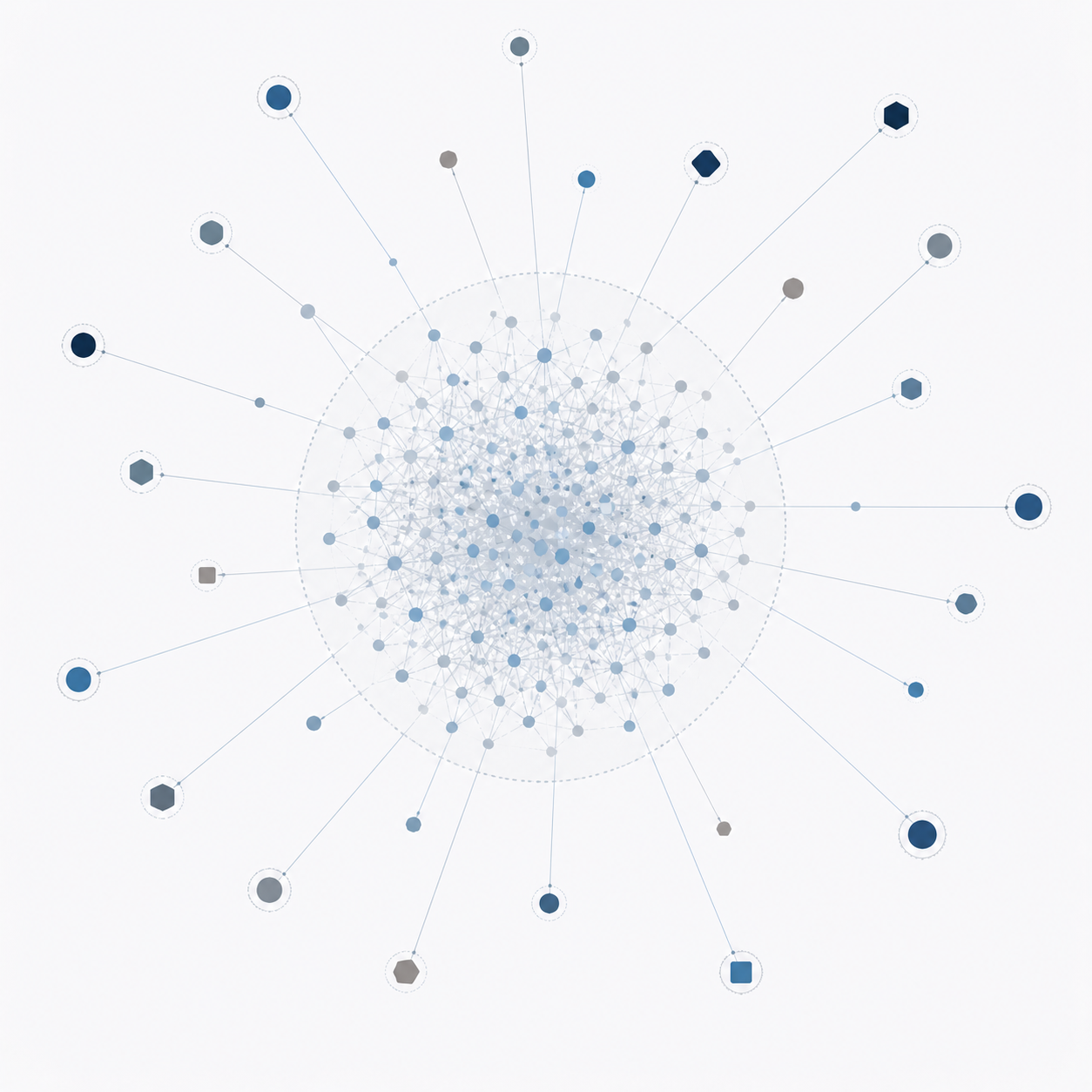
Original Intelligence is the capacity to generate ideas, solutions, and perspectives that are unique relative to both AI and human outputs. It is measured not against a standard of quality or expertise, but against an idea space (the collection of existing ideas already associated with a given topic, prompt, or challenge).
The more an idea diverges from what already exists in that space, the more original it is. Someone with high Original Intelligence does not simply recombine familiar concepts in slightly different configurations, but introduces genuinely distinct thinking that moves the idea space forward.
This is different from general intelligence (IQ), which measures cognitive processing and reasoning. It is different from traditional creativity assessments, most of which focus on quantity of ideas or domain-specific skill. And it is different from emotional intelligence (EQ), which measures interpersonal capability. Original Intelligence is its own dimension, predicting performance outcomes that older metrics cannot.
Research has shown that Original Intelligence is a stable cognitive trait that predicts achievement across multiple domains, and that individuals with higher OIQ scores are consistently more likely to embrace new tools, adapt to changing environments, and produce differentiated outcomes. That same body of research shows Original Intelligence to be a stronger predictor of success than traditional markers like GPA or SAT scores, which were designed for a world where the accumulation and recall of knowledge conferred advantage. In an age when AI can retrieve and synthesize information on demand, those markers have lost much of their signal.
Why Original Intelligence Matters for AI Adoption
The problem with most AI adoption strategies is that they focus on the technology and skip the people. Organizations invest in licenses, run training sessions, and measure efficiency gains. They must start asking the more fundamental question: who on our team can use this tool in a way that produces something better than the tool could produce on its own?
That question is not about technical proficiency. It is about Original Intelligence.
Consider what happens when a team with a low OIQ score is given access to AI. They use it to generate outputs, accept those outputs largely as given, and move on. The work gets done faster. But the work looks like everyone else's work, because it was shaped by the same AI patterns everyone else is using. This phenomenon of AI homogenization is already detectable across creative industries, where outputs are converging in ways that were not possible before generative AI became widespread.
By contrast, someone with high Original Intelligence uses AI differently. They might prompt a model to generate 100 variations of an idea, then build on the one that points toward something no one else has thought of. They recognize where AI is helpful and where it introduces limits, testing an output, rather than just blindly accepting it. The AI becomes an amplifier of their originality, not a substitute for it.
What Original Intelligence Looks Like in Practice
Original Intelligence is not just an abstract concept. It shows up in observable behaviors across every function and role.
A sales representative who reframes a competitor's perceived strength as a weakness during a live conversation is demonstrating Original Intelligence. A product manager who takes a recurring customer complaint and reverse-engineers it into a feature that drives adoption is demonstrating Original Intelligence. A marketing strategist who uses AI to generate 100 campaign directions and then builds something distinctive from the one direction the AI could not fully articulate is demonstrating Original Intelligence. A team leader who transforms a budget cut into a creative constraint that unlocks a breakthrough approach is demonstrating Original Intelligence.
These behaviors share a common thread: the person is expanding the idea space, not drawing from it. They are producing something that could not have been generated by the AI alone, and that others are unlikely to produce because it requires a distinct cognitive orientation.
How Original Intelligence Is Measured: The OIQ Score and OIQ Type
Hupside developed Hupchecker specifically to measure Original Intelligence in individuals and teams. It is the only validated tool that generates an OIQ Score (a quantified measure of how original an individual's ideas are comparatively) and an OIQ Type (which describes how that person naturally generates and shapes original ideas).
There are four primary OIQ Types, each with sub-types, for a total of ten possible outcomes. These types are not rankings. Every type represents a valuable and distinct contribution to a team, and every type can be developed over time. The OIQ type functions as a lens: it helps organizations understand how someone approaches a problem, how they are likely to interact with AI tools, and how their originality profile complements or contrasts with others on their team.
Unlike traditional assessments, Hupchecker has no right or wrong answers. It measures originality relative to the idea space, which means results are not about whether someone is smart or knowledgeable. They are about whether someone is thinking beyond the expected. The score can also shift over time or vary across disciplines, reflecting Original Intelligence's dynamic quality.
From the OIQ Score and Type, organizations receive several additional signals. The Original Contribution Signal highlights how an individual pairs with AI and with other people to create possibilities that neither could generate alone. The ROVI and POVI metrics provide further granularity on the nature of an individual's originality contributions. Together, these data points give leaders a complete picture of where genuine originality lives in their organization, and how to deploy it effectively.
Building Toward an Original Intelligence Strategy
Understanding Original Intelligence at the individual level is only the beginning. The real leverage comes from applying insights at the organizational level, where the composition of teams, the alignment of roles, and the structure of AI adoption can all be calibrated around original intelligence. A credible Original Intelligence strategy tends to unfold in three connected phases.
- Establish a human baseline: Before introducing AI into any workflow, it is worth understanding how your people think without it. This means assessing original thinking across the team independently of AI assistance, so you have a clear picture of where originality naturally lives and how it is distributed across roles and functions. This baseline is not a judgment, but a starting point that makes every subsequent action more precise.
- Measure how AI changes the picture: Once individuals begin working with AI tools, their originality output shifts, and not always in the same direction. Some people produce more original work when AI handles routine generation and frees them to focus on the ideas only they can contribute. Others find that heavy AI use flattens their output, pulling them toward the mean rather than away from it. Understanding who responds to AI in which way allows leaders to design training, role expectations, and adoption strategies that are matched to reality rather than assumption.
- Embed what works: The patterns that emerge from the first two phases, the behaviors that consistently produce original output when combined with AI, need to move from individual practice into shared organizational capability. This means identifying the people whose AI use reflects genuinely original thinking, capturing what they do differently, and building structures that allow those behaviors to spread. It also means revisiting team compositions with an eye toward complementary originality profiles, so that the range of thinking styles on a given team produces the friction and cross-pollination that originality requires.
The cost of skipping this work is real. Organizations that implement AI without accounting for Original Intelligence face a specific and growing risk: their outputs become indistinguishable from their competitors, and they run the risk of producing AI Slop. The people who know that their value lies in something beyond execution move on, and the window for building a lasting differentiation advantage narrows. History offers a consistent pattern: the organizations that thrive through technological transformation are not necessarily the ones that adopted the technology first, but the ones that understood what human contribution the technology could not replace, and built deliberately around that.
What To Do Next?
Whether you are hiring for a role that requires original thinking, building a team to lead an AI transformation, or trying to understand why your current AI investment has not yet delivered meaningful ROI, the answer starts with knowing where Original Intelligence lives in your organization and how to grow it.
- Learn more about how Originality Scoring and Hupchecker works
- Take the OIQ Challenge, and learn more about your style and how it works with the AI systems that are currently available
- Start a free trial with Hupside’s Hupchecker and explore the playbooks for success for your organization in this new era of AI